
Ode to the Flesh
In defense of the ephemeral, the indelible.

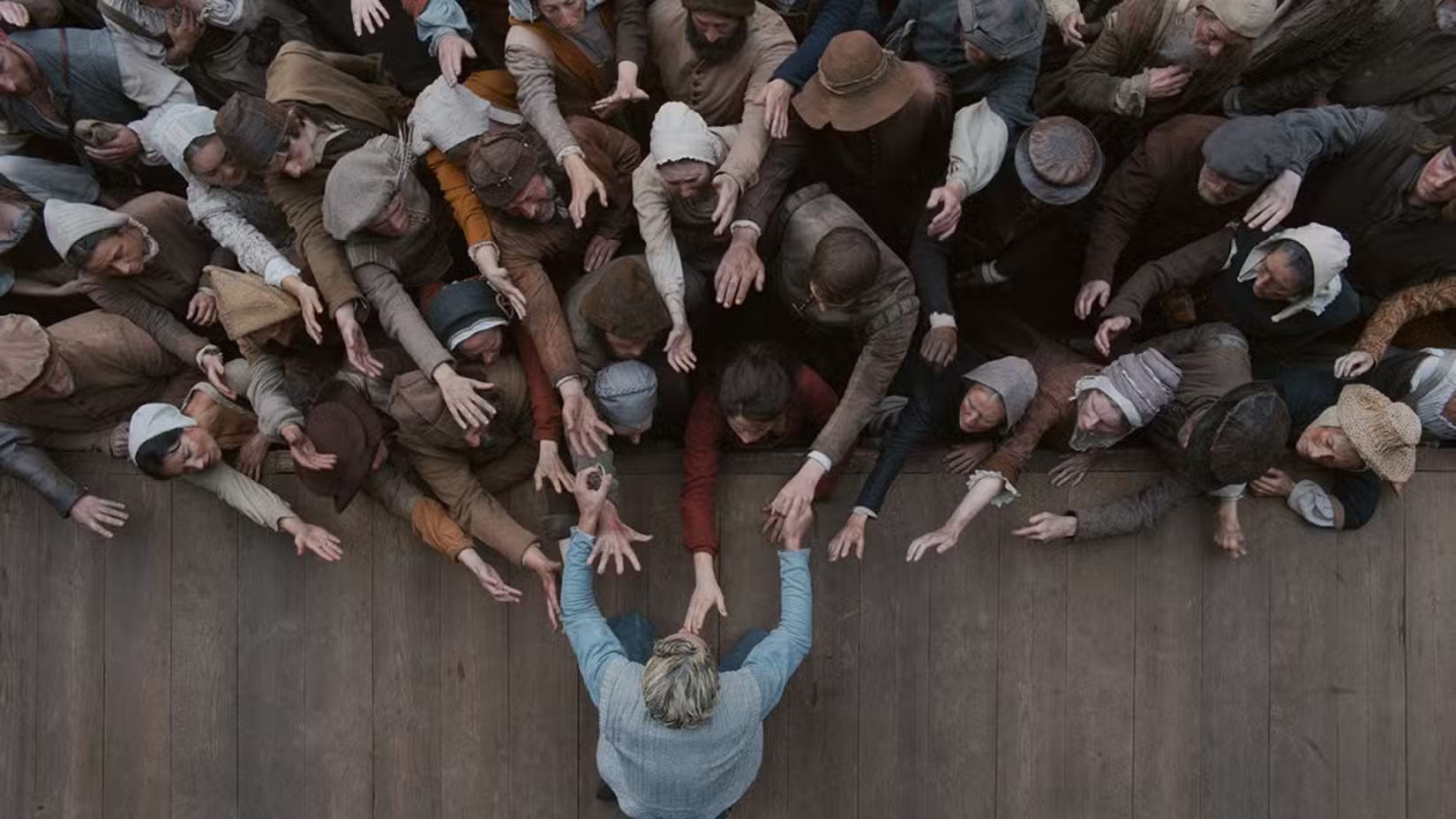
Remember me.
I am sitting in a lightly filled room at the end of Hamnet. Agnes Shakespeare reaches towards the actor playing Hamlet as he delivers his final lines. Many in the crowd behind her, faces streaked with catharsis, do the same. Max Richter’s “On the Nature of Daylight” plays as the credits roll. I am thinking about death and how often it isn’t fair. I am thinking about stories and their resurrection power. My eyes are red and puffy. Some folks file out of the theater. I don’t want to leave the room. I notice a family of five in the row in front of me. They, too, sit in tear-soaked silence.
Requiem aeternam dona eis, Domine, et lux perpetua luceat eis. // Eternal rest give to them, O Lord, and let perpetual light shine upon them.
I am singing the opening measures of Maurice Duruflé’s Requiem with the Atlanta Symphony Orchestra Chorus during a Monday evening dress rehearsal. Something mystical will happen in a few nights’ time. Using the vessel of an old prayer, the artistic imagination of one man will come to life as neurons fire in dozens of brains, impelling their fingers to press down on animal skin and metal, or to pass air through a reed using their diaphragm, lungs, and mouths. A Scottish man will coordinate these actions by the movement of his hands. Hundreds of people will listen. They will find something in the music that reminds them of a past grief, a present joy (or they won’t). This intersection of artistry, instrument, flesh, blood, and soul—that which we call music—will evoke magic. The man standing next to me is not singing. He eventually sits down. At some point, I notice that he’s crying. I don’t know him that well at this point, but at the next break in the music, I sit down and ask him if everything is okay. He tells me about his mother’s recent passing. He thought he’d be able to sing this mass—this prayer for the departed—but he couldn’t get the words out once the music started.
The Lord bless you and keep you.
Lobet den Herrn, denn unsern Gott loben, das ist ein köstlich Ding. // Praise the Lord! It is a precious thing to praise our God.
I am standing near the top of the rotunda of a building on Samford’s campus. The A Cappella Choir has been conscripted to sing for a woman’s 100th birthday celebration. She loves the choir and has made this request to the powers that be. I don’t know who she is. Candidly, I’m thinking about the inconvenience of the gig at this point in the semester. We sing a setting of the blessing from Numbers 6. The woman sits in a wheelchair in the center of the room below. She is facing away from me. As the amens build toward the climax of the song, I look down and notice her arms reaching towards the sky, her head tilted back. Her face is hidden from me, but I imagine it is painted with rapture. My throat seizes; I cannot finish singing the song. Suddenly, I am in a church in Tallinn, Estonia. The same choir is nearing the end of a tour through the Baltic states (Latvia, Lithuania, Estonia). After a week of competitions and concerts, we are recording the corpus of music we’ve been singing throughout the tour. The final song we sing is a setting of two different psalms by a German composer named Albert Becker. My brother is standing next to me. We’ve come to realize that this choir will forever be a linchpin in our story as siblings. Soon, my sister will join him in the ensemble; today, though, it’s just us. The final chord, G-major, lingers in the old rafters. I’ve already moved to hug my brother. I will never sing with this choir again.
I cannot only see but you stopped me from blinking.
I am surrounded by bodies, most immediately a few of my closest friends, swaying and shifting rhythmically in a dark, extravagantly lit room. Air passes through hundreds of sets of vocal cords, (mostly) resonant frequencies bounce off the walls. The collective hypnosis should not end—what else can make you feel like this? elated by sound, mysticized by the ephemeral truth that human connection is real and this, this embodied experience alone, is where you can find it, among strangers and lovers and thieves and addicts and wanderers, all fleshly reservoirs of memory and meaning—but it eventually will. Before the spell is broken, a man will sing a song about Fatherhood and God and Silence, a song about Time Stopping and Sight, and I will touch a small tattoo of a bee set next to a few words in my wife’s handwriting, and I will hold my three-day-old daughter again on the night she came home, and I will listen to the same song with her in my arms.
Lift up your hearts! We lift them up to the Lord.
I am on the small stage at church, playing guitar and singing a song as the rest of the congregation walks towards the altar to receive communion. I tend to keep my eyes on the music (or closed, if I know the song well), but today, I happen to look up and see a toddler toddling towards the priest. Her curly, brown hair is in two, flared pigtails; her white tennis shoes are scuffed. She reaches up confidently for the Body, dips it generously in the Blood, turns the corner and walks back to her pew with her mother trailing. The next lyric catches in my throat; the note comes out strangled and warped. Does she know what it is she’s doing? Is it possible she’s aware of the miracle, deep down, in some unintelligible way? What daydreams colonize the mind of a small child?
But the Hebrew word, the word timshel —‘Thou mayest’—that gives a choice… why, that makes a man great, that gives him stature with the gods, for in his weakness and his filth and his murder of his brother he has still the great choice.
I am sitting in a living room on a Thursday night, surrounded by colleagues and friends, bound by the common tether of Steinbeck’s great retelling of Genesis, and America, and the story of humanity, and everything in between. Some of us are English teachers; most are not; all have committed their careers to act of forming the minds, bodies, and souls of young people. There are days when we feel the nobility of this profession. There are many more when we feel the futility of it. And yet, on this night, after spending 80-90 minutes talking about East of Eden—our favorite characters, Kathy’s wickedness, Steinbeck’s writing of women more broadly, the Salinas Valley as a proxy for American expansion and lust, the demythologizing of parents, timshel, the perfect final pages—the conversation shifts to the beauty of the great choice in the context of our work. Isn’t this what education boils down to at the end of it all? Equipping students to confront Steinbeck’s ultimate, end-of-life question: “Have I done well – or ill?”
It’s a wheel, Winnie; a ripple in water.
I am sitting in the audience for opening night of Tuck Everlasting, a show on which I’ve worked as an assistant director (or, perhaps I am standing backstage dressed as Joseph Pulitzer in our recent production of Newsies; as my ethics professor in graduate school was fond of saying: multiply the examples). Even though I’ve seen the show or portions of it dozens of times over the past few months, I can’t help but be moved to tears by the story. The thought strikes me: this collection of people will never again experience this story in this setting. this will be the only cast of this particular show that will be composed of these individuals. this evening is a unique event in the history of the universe hereunto and evermore it shall be so.
I’ll share this thought with future casts of students. I’ll bring it to mind at future concerts, when (sometimes) words set to music casts a spell over a room. I’ll try to keep it tattooed on the inner wall of my consciousness at all times; for incarnate moments with family, friends, and strangers alike are often the closest any of us come to divine revelation on this side of paradise. They are thin places, moments when the word “mystery” sheds its foreboding connotation, striking us instead as holy and sweet.